旧新橋停車場は「東京都港区東新橋内1-5-3」にあります。
旧新橋停車場とありますが、今だと新橋駅よりも汐留駅ですね。それでは向かいましょう。
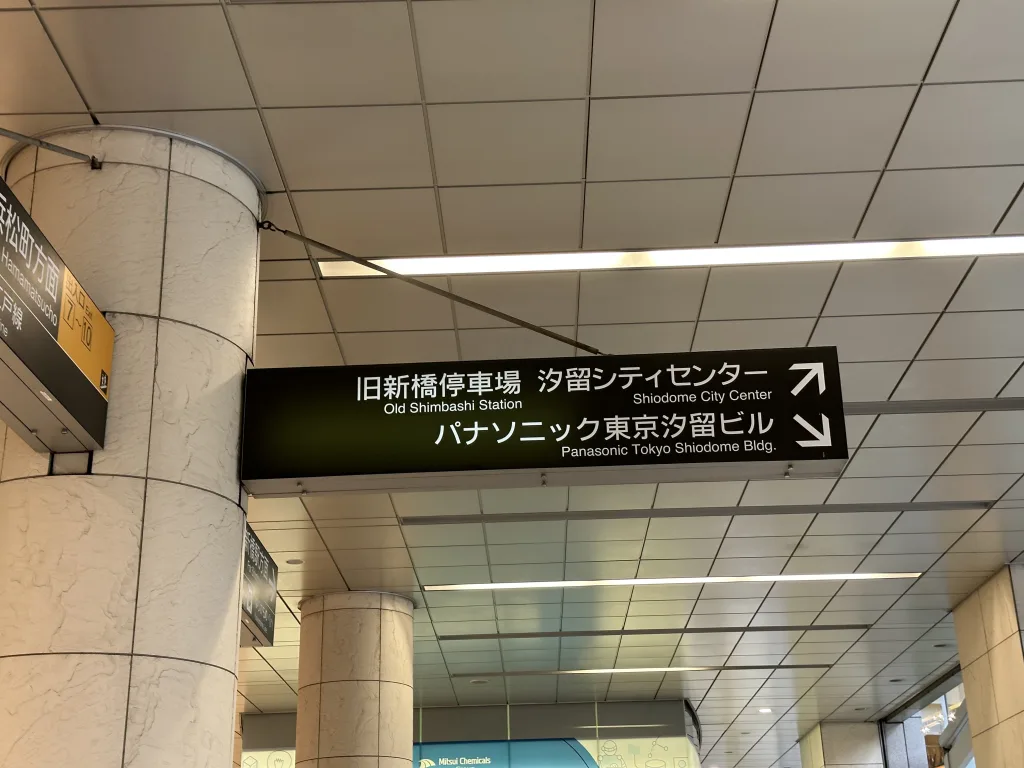
旧新橋停車場には地下道から向かうことができます。
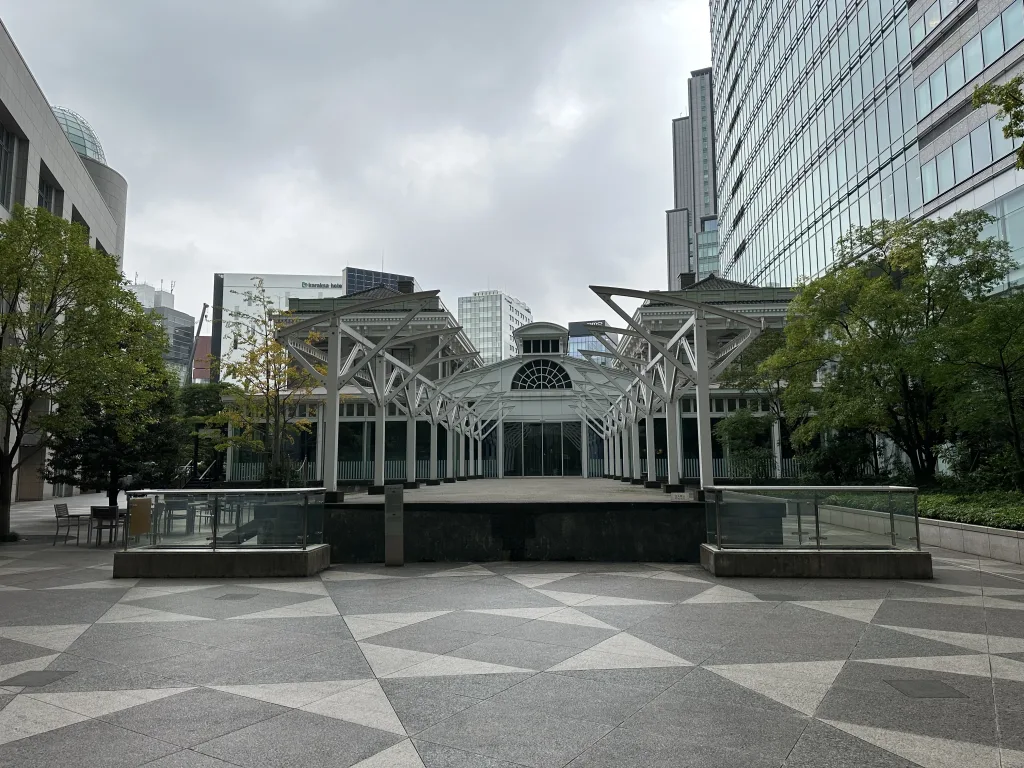
旧新橋停車場に到着しました。ホームと奥の建物が残っていますね。
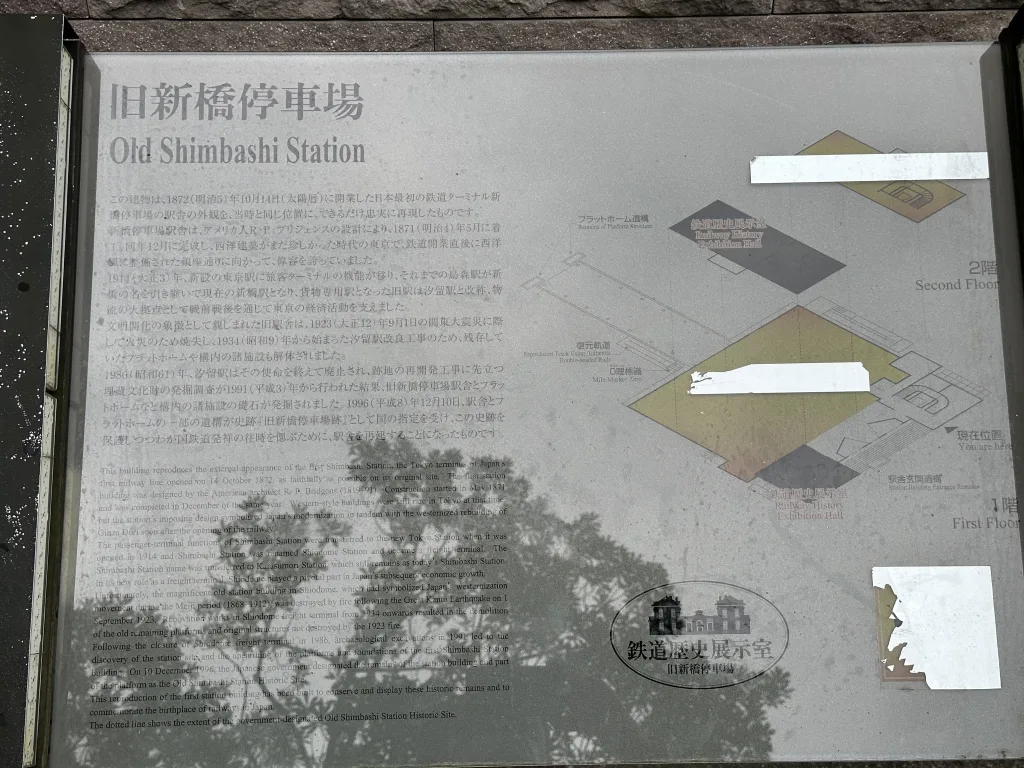
旧新橋停車場
Old Shimbashi Station
【日本語解説】
この建物は、1872(明治5)年10月14日(太陽暦)に開業した日本最初の鉄道ターミナル新橋停車場の駅舎の外観を、当時と同じ位置に、できるだけ忠実に再現したものです。
新橋停車場駅舎は、アメリカ人R・P・ブリジェンスの設計により、1871(明治4)年5月に着工、同年12月に完成し、西洋建築がまだ珍しかった時代の東京で、鉄道開業直後に西洋風に整備された銀座通りに向かって、威容を誇っていました。
1914(大正3)年、新設の東京駅に旅客ターミナルの機能が移り、それまでの烏森駅が新橋の名を引き継いで現在の新橋駅となり、貨物専用駅となった旧駅は汐留駅と改称、物流の大拠点として戦前戦後を通じて東京の経済活動を支えました。
文明開化の象徴として親しまれた旧駅舎は、1923(大正12)年9月1日の関東大震災に際して火災のため焼失し、1934(昭和9)年から始まった汐留駅改良工事のため、残存していたプラットホームや構内の諸施設も解体されました。
1986(昭和61)年、汐留駅はその使命を終えて廃止され、跡地の再開発工事に先立つ埋蔵文化財の発掘調査が1991(平成3)年から行われた結果、旧新橋停車場駅舎とプラットホームなど構内の諸施設の礎石が発掘されました。1996(平成8)年12月10日、駅舎とプラットホームの一部の遺構が史跡「旧新橋停車場跡」として国の指定を受け、この史跡を保護しつつわが国鉄道発祥の往時を偲ぶために、駅舎を再現することになったものです。
【英語解説(English)】
This building reproduces the external appearance of the First Shimbashi Station, the Tokyo terminus of Japan's first railway line opened on 14 October 1872, as faithfully as possible on its original site. The first station building was designed by the American architect R. P. Bridgens (1819-91). Construction started in May 1871 and was completed in December of the same year. Western-style buildings were still rare in Tokyo at that time, but the station's imposing design symbolized Japan's modernization in tandem with the westernized rebuilding of Ginza Dori soon after the opening of the railway.
The passenger-terminal functions of Shimbashi Station were transferred to the new Tokyo Station when it was opened in 1914, and Shimbashi Station was renamed Shiodome Station and became a freight terminal. The Shimbashi Station name was transferred to Karasumori Station, which still remains as today's Shimbashi Station. In its new role as a freight terminal, Shiodome played a pivotal part in Japan's subsequent economic growth.
Unfortunately, the magnificent old station building, which had symbolized Japan's westernization movement during the Meiji period (1868-1912), was destroyed by fire following the Great Kanto Earthquake on 1 September 1923. Renovation works in Shiodome freight terminal from 1934 onwards resulted in the demolition of the old remaining platforms and original structures not destroyed by the 1923 fire.
Following the closure of Shiodome freight terminal in 1986, archaeological excavations in 1991 led to the discovery of the station site, and the unearthing of the platforms and foundations of the First Shimbashi Station building. On 10 December 1996, the Japanese government designated the remains of the station building and part of the platform as the Old Shimbashi Station Historic Site.
This reproduction of the first station building has been built to conserve and display these historic remains and to commemorate the birthplace of railways in Japan.
The dotted line shows the extent of the government-designated Old Shimbashi Station Historic Site.
旧新橋停車場を見学する前に、まずはここを読んでからだと理解が深まります。
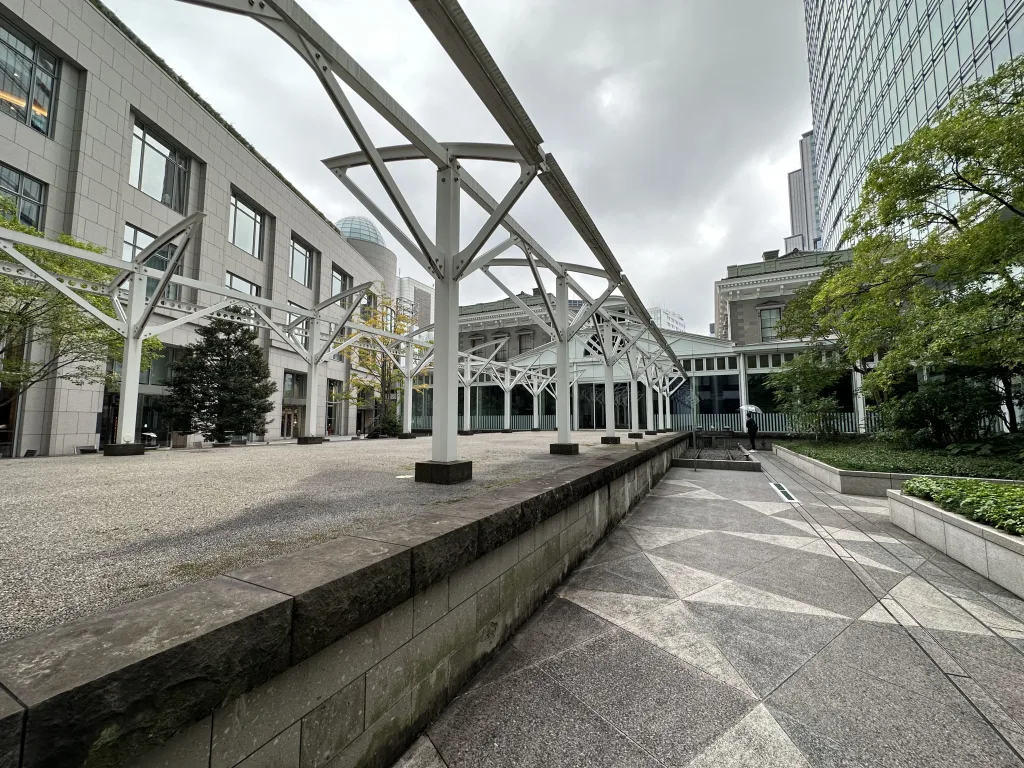
プラットホームはかなり長い距離を復元していますね🤔
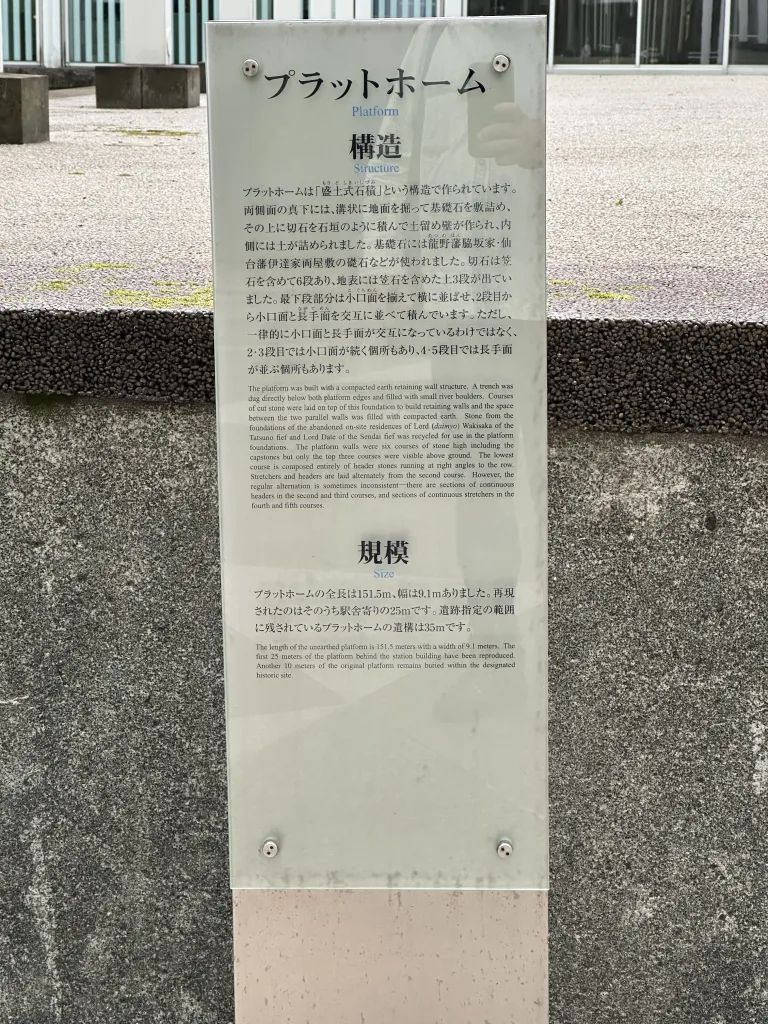
プラットホーム
Platform
構造
Structure
プラットホームは「盛土式石積(もりどしきいしづみ)」という構造で作られています。
両側面の真下には、溝状に地面を掘って基礎石を敷詰め、その上に切石を石垣のように積んで土留(どど)め壁が作られ、内側には土が詰められました。基礎石には龍野(たつ の)藩脇坂家・仙台藩伊達家両屋敷の礎石などが使われました。切石は笠石を含めて6段あり、地表には笠石を含めた上3段が出ていました。最下段部分は小口(こ ぐち)面を揃えて横に並ばせ、2段目から小口面と長手(なが て)面を交互に並べて積んでいます。ただし、一律的に小口面と長手面が交互になっているわけではなく、2・3段目では小口面が続く個所もあり、4・5段目では長手面が並ぶ個所もあります。
The platform was built with a compacted earth retaining wall structure. A trench was dug directly below both platform edges and filled with small river boulders. Courses of cut stone were laid on top of this foundation to build retaining walls and the space between the two parallel walls was filled with compacted earth. Stone from the foundations of the abandoned on-site residences of Lord (daimyo) Wakisaka of the Tatsuno fief and Lord Date of the Sendai fief was recycled for use in the platform foundations. The platform walls were six courses of stone high including the capstones but only the top three courses were visible above ground. The lowest course is composed entirely of header stones running at right angles to the row. Stretchers and headers are laid alternately from the second course. However, the regular alternation is sometimes inconsistent—there are sections of continuous headers in the second and third courses, and sections of continuous stretchers in the fourth and fifth courses.
規模
Size
プラットホームの全長は151.5m、幅は9.1mありました。再現されたのはそのうち駅舎寄りの25mです。遺跡指定の範囲に残されているプラットホームの遺構は35mです。
The length of the unearthed platform is 151.5 meters with a width of 9.1 meters. The first 25 meters of the platform behind the station building have been reproduced. Another 10 meters of the original platform remains buried within the designated historic site.
プラットホームの長さは151.5mもあったんですね。建設時には大名屋敷にあった石を使うなど色々と苦労したようですね。
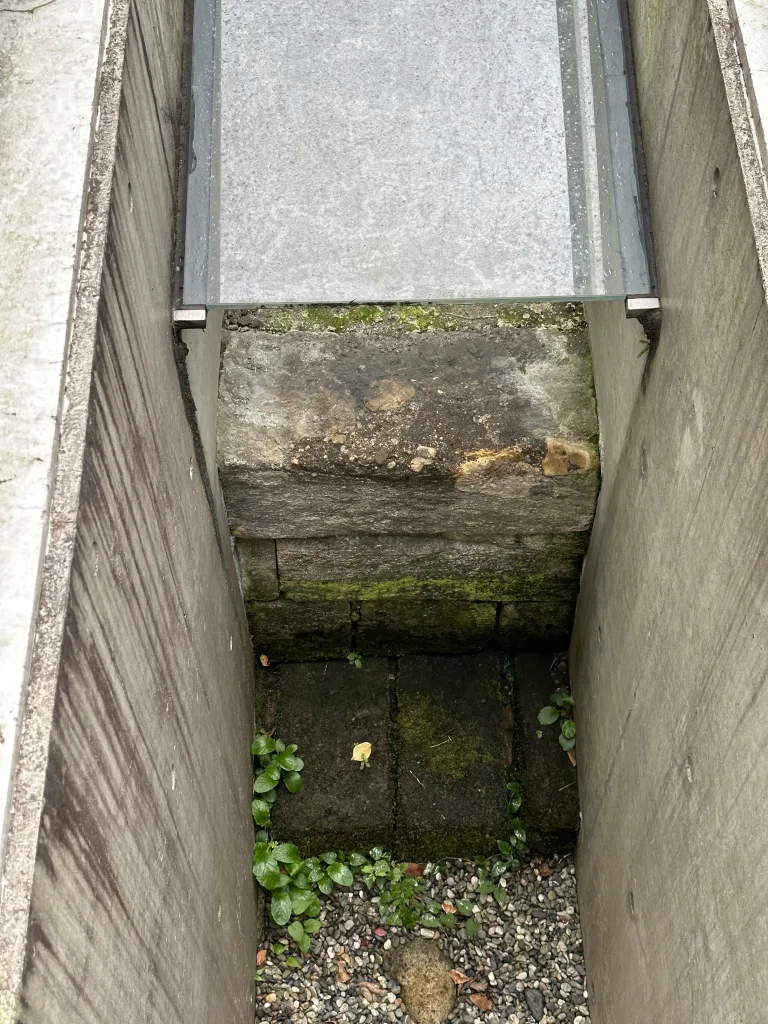
プラットホームの遺構も一部ですが見れます。思ったほど高さはないんですね🤔
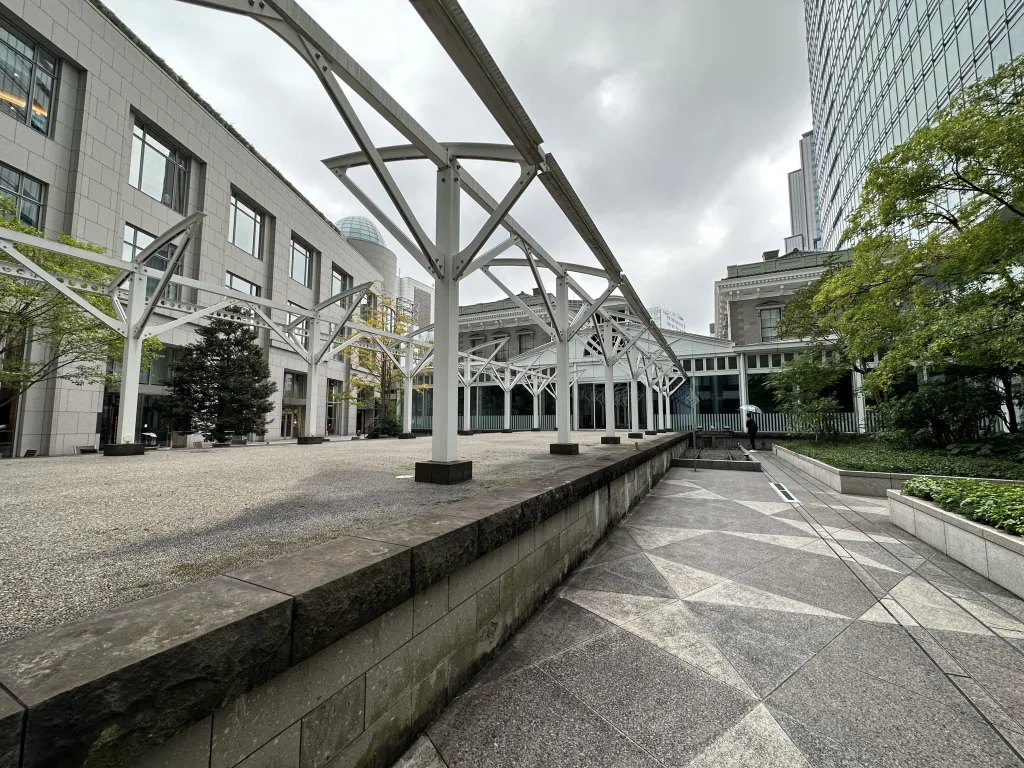
奥には線路が残っていますね。そちらを見てみましょう。
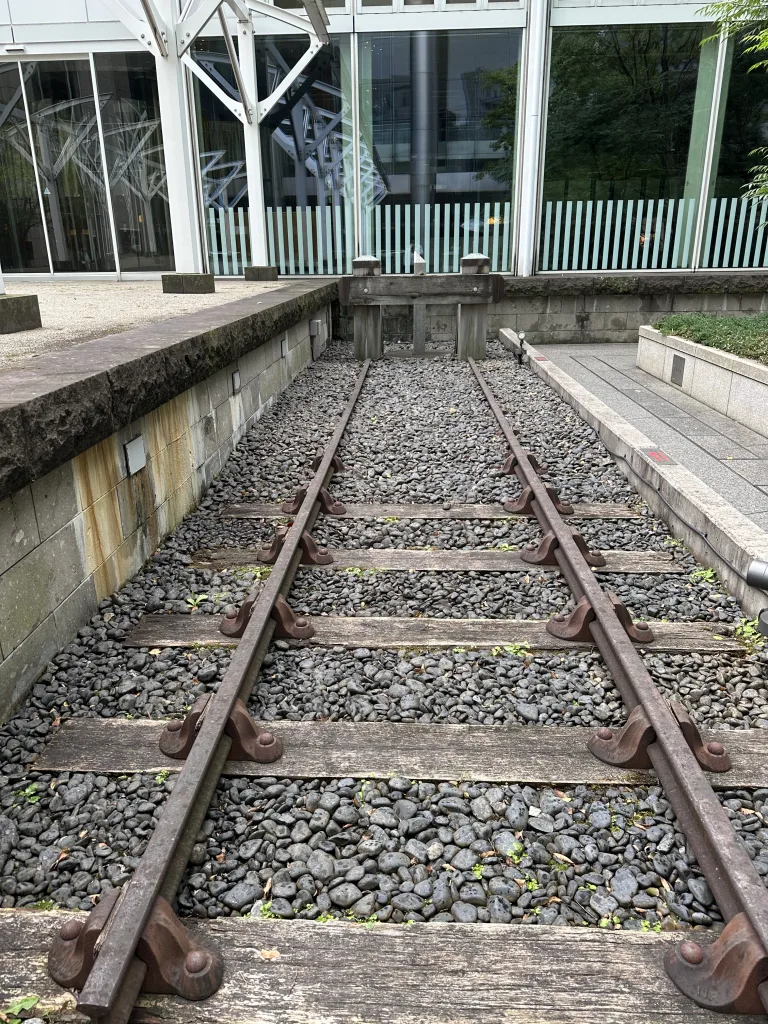
線路も復刻させていますね。枕木や留め具など色々と今とは違うものが多くあります。
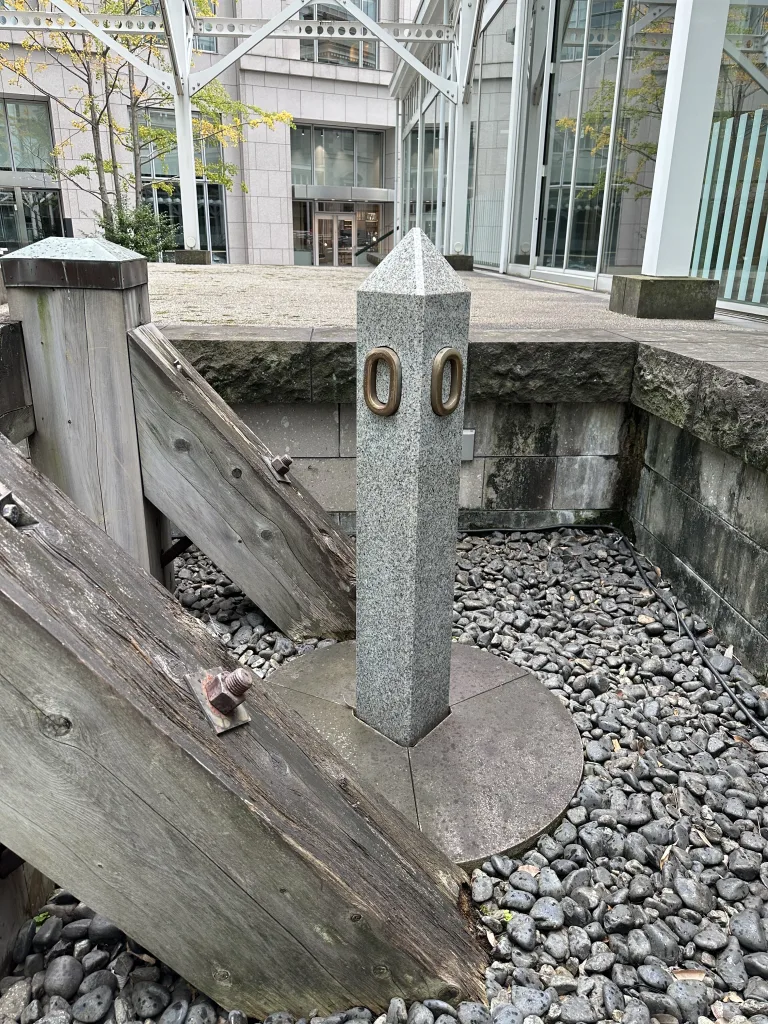
ここが日本最初の0哩になっていたのですね。
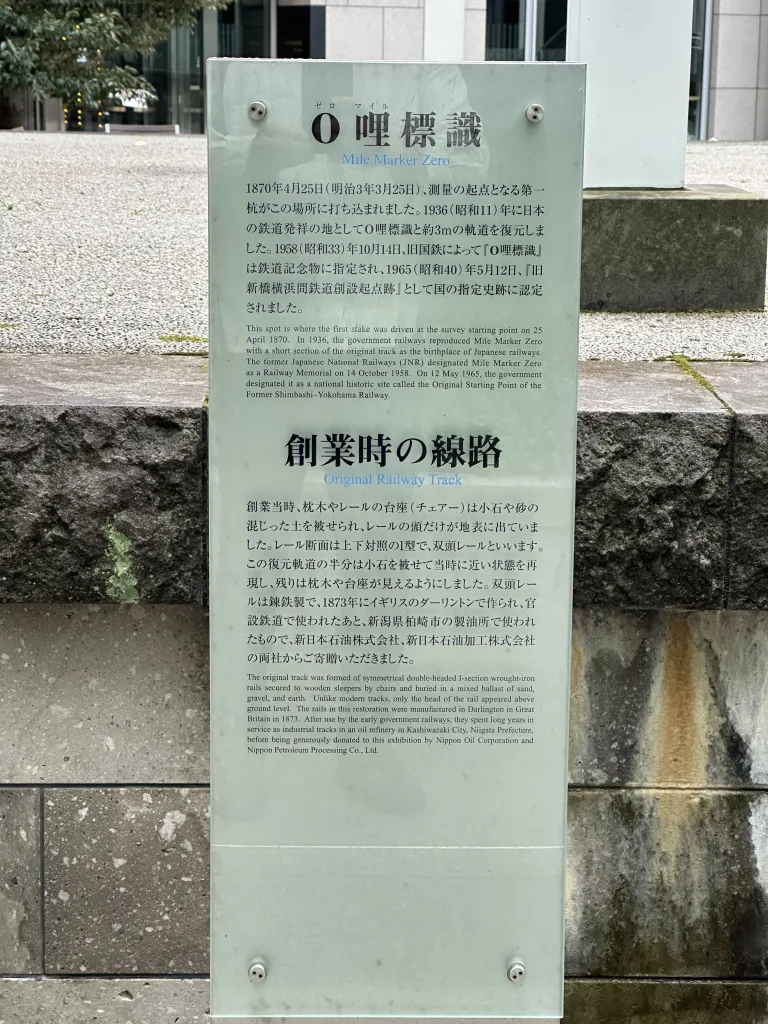
0哩(ゼロマイル)標識
Mile Marker Zero
1870年4月25日(明治3年3月25日)、測量の起点となる第一杭がこの場所に打ち込まれました。1936(昭和11)年に日本の鉄道発祥の地として0哩標識と約3mの軌道を復元しました。1958(昭和33)年10月14日、旧国鉄によって「0哩標識」は鉄道記念物に指定され、1965(昭和40)年5月12日、「旧新橋横浜間鉄道創設起点跡」として国の指定史跡に認定されました。
This spot is where the first stake was driven at the survey starting point on 25 April 1870. In 1936, the government railways reproduced Mile Marker Zero with a short section of the original track as the birthplace of Japanese railways. The former Japanese National Railways (JNR) designated Mile Marker Zero as a Railway Memorial on 14 October 1958. On 12 May 1965, the government designated it as a national historic site called the Original Starting Point of the Former Shimbashi-Yokohama Railway.
創業時の線路
Original Railway Track
創業当時、枕木やレールの台座(チェアー)は小石や砂の混じった土を被せられ、レールの頭だけが地表に出ていました。レール断面は上下対照のI型で、双頭レールといいます。この復元軌道の半分は小石を被せて当時に近い状態を再現し、残りは枕木や台座が見えるようにしました。双頭レールは錬鉄製で、1873年にイギリスのダーリントンで作られ、官設鉄道で使われたあと、新潟県柏崎市の製油所で使われたもので、新日本石油株式会社、新日本石油加工株式会社の両社からご寄贈いただきました。
The original track was formed of symmetrical double-headed I-section wrought-iron rails secured to wooden sleepers by chairs and buried in a mixed ballast of sand, gravel, and earth. Unlike modern tracks, only the head of the rail appeared above ground level. The rails in this restoration were manufactured in Darlington in Great Britain in 1873. After use by the early government railways, they spent long years in service as industrial tracks in an oil refinery in Kashiwazaki City, Niigata Prefecture, before being generously donated to this exhibition by Nippon Oil Corporation and Nippon Petroleum Processing Co., Ltd.
線路は寄贈されたものであっても実際に使われていたものなのですね🤔0哩は国の指定史跡になっていることから、近代日本の産業の発展に鉄道がいかに重要だったのかを物語っていますね。
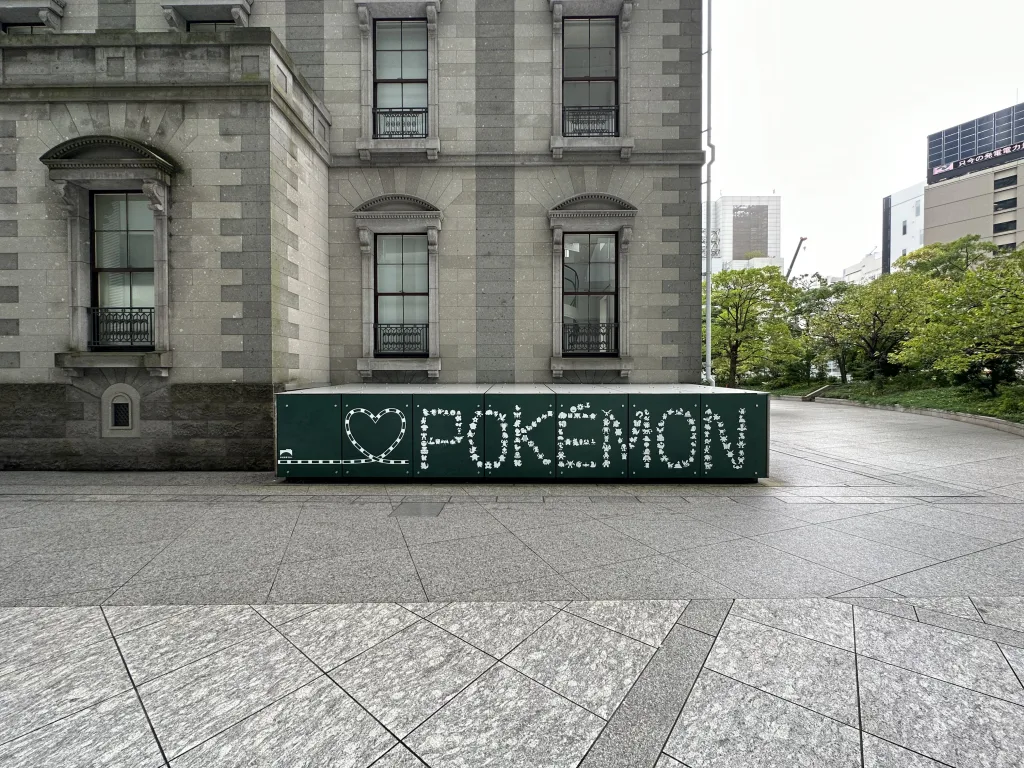
建物の側面です。窓枠や床下通気口などの作りが細かくていいですね。
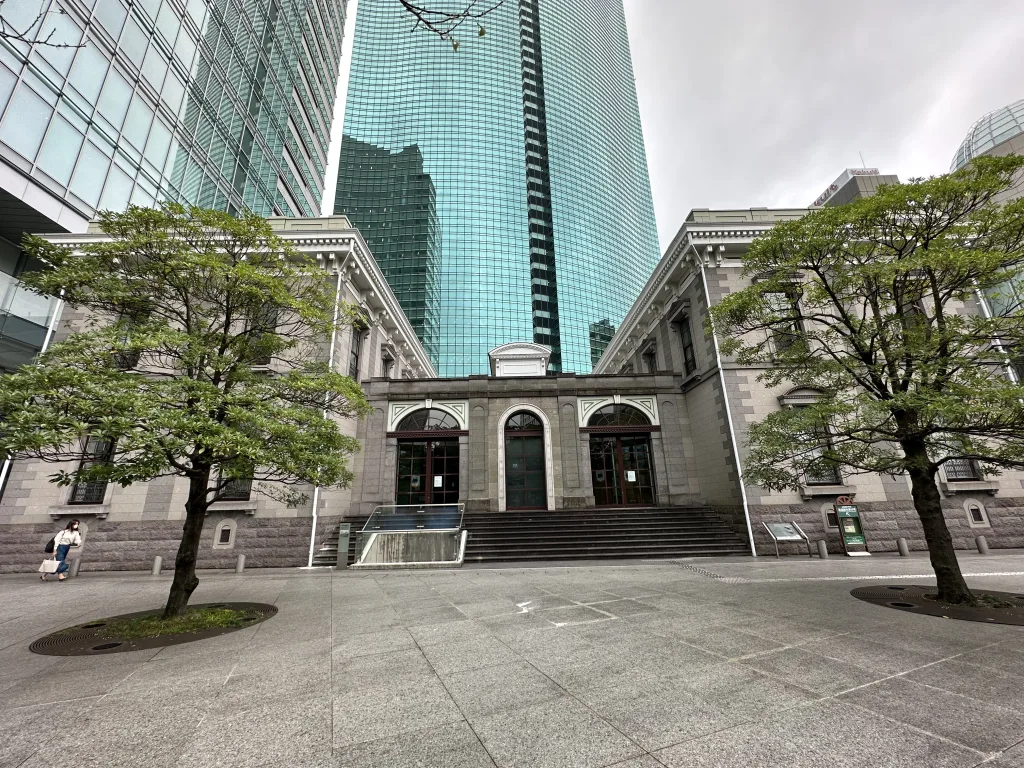
今度は秋の入口側になります。なかなかお洒落な造りとなっていますね。
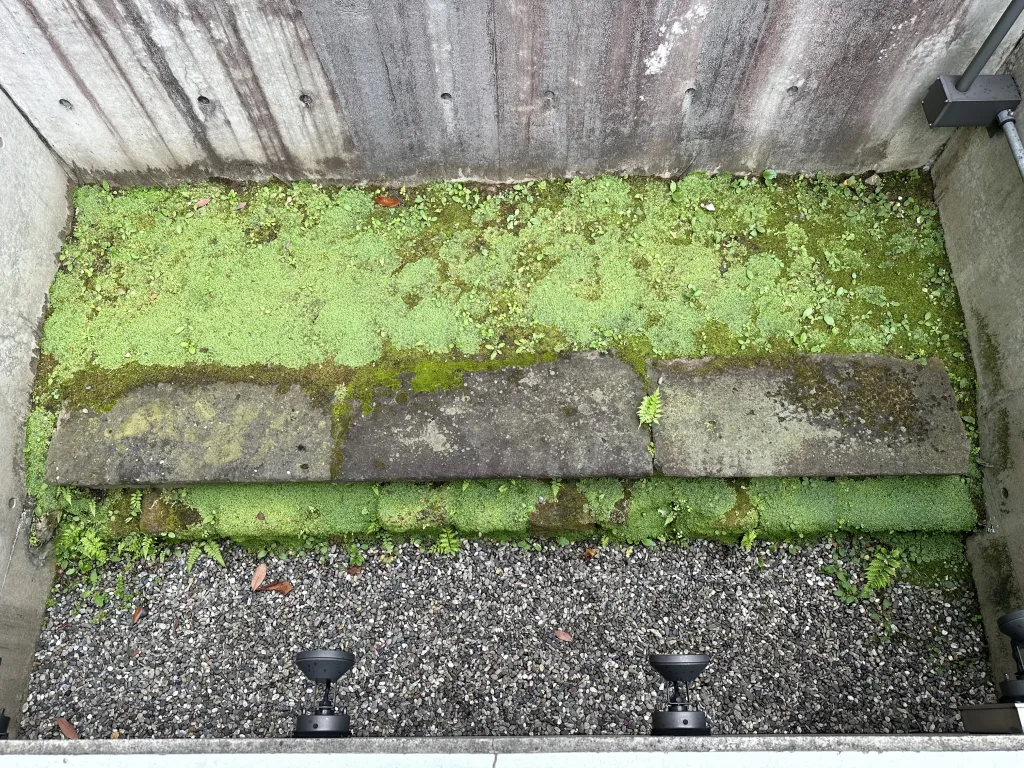
駅の入口にも遺構が残っていますね。
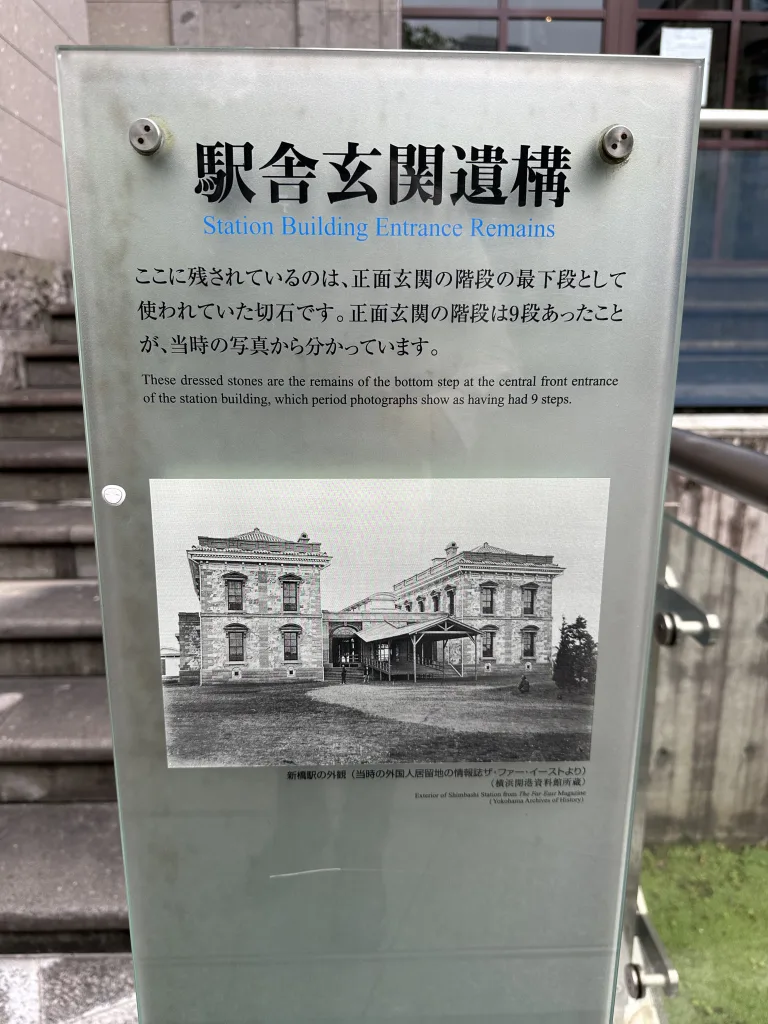
駅舎玄関遺構
Station Building Entrance Remains
ここに残されているのは、正面玄関の階段の最下段として使われていた切石です。正面玄関の階段は9段あったことが、当時の写真から分かっています。
These dressed stones are the remains of the bottom step at the central front entrance of the station building, which period photographs show as having had 9 steps.
【写真下のキャプション】
新橋駅の外観(当時の外国人居留地の情報誌『ザ・ファー・イースト』より)
(横浜開港資料館所蔵)
Exterior of Shimbashi Station from The Far East Magazine
(Yokohama Archives of History)
当時鉄道を作るときは結構反対派が強かったと聞いてはいましたが、それでも結構立派な建物を作っていたんですね。
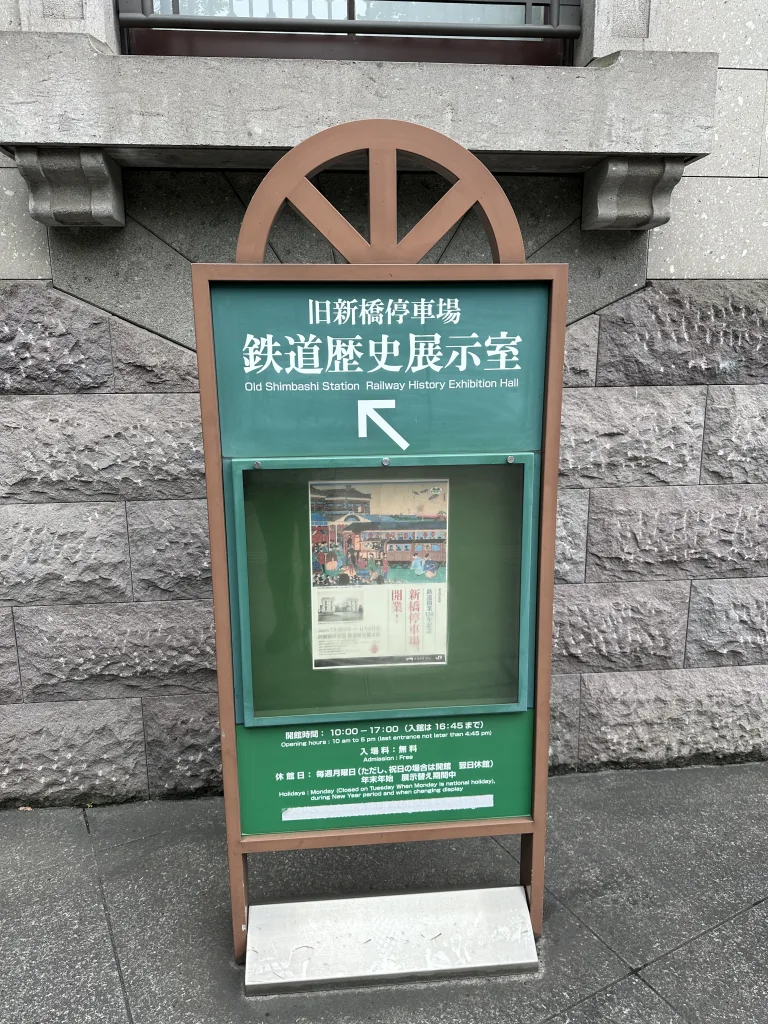
中には鉄道展示室があります。今回は休館日に来てしまったので見学することができませんでした。
東京の都心には近代産業遺産に関する遺構が結構残っています。ただ近代史は学校ではあまり詳しく学ぶ事もないので興味のない人も多いかと思います。なので見かけたらフラッと眺めるだけでも十分面白いかと思います。
近くにあるお勧めのお店



<執筆者プロフィール>
予備自補軍曹
経営学修士(MBA)
予備自衛官(技能)
民間人から予備自衛官補(技能)、そして予備自衛官になりました。休日はお城や神社仏閣、戦争遺跡を見歩いているので、面白そうなものを紹介していきます。
姉妹ブログとして優待太郎の名前で「MBAホルダーが保有している株主優待銘柄」も運営しています。

にほんブログ村

にほんブログ村

にほんブログ村

にほんブログ村
